
- English
- Español
- Português
- русский
- Français
- 日本語
- Deutsch
- tiếng Việt
- Italiano
- Nederlands
- ภาษาไทย
- Polski
- 한국어
- Svenska
- magyar
- Malay
- বাংলা ভাষার
- Dansk
- Suomi
- हिन्दी
- Pilipino
- Türkçe
- Gaeilge
- العربية
- Indonesia
- Norsk
- تمل
- český
- ελληνικά
- український
- Javanese
- فارسی
- தமிழ்
- తెలుగు
- नेपाली
- Burmese
- български
- ລາວ
- Latine
- Қазақша
- Euskal
- Azərbaycan
- Slovenský jazyk
- Македонски
- Lietuvos
- Eesti Keel
- Română
- Slovenski
- मराठी
- Srpski језик
How Does The Grain And Texture Of Wood Make Each Pair Of Pure Wood Sunglasses Unique?
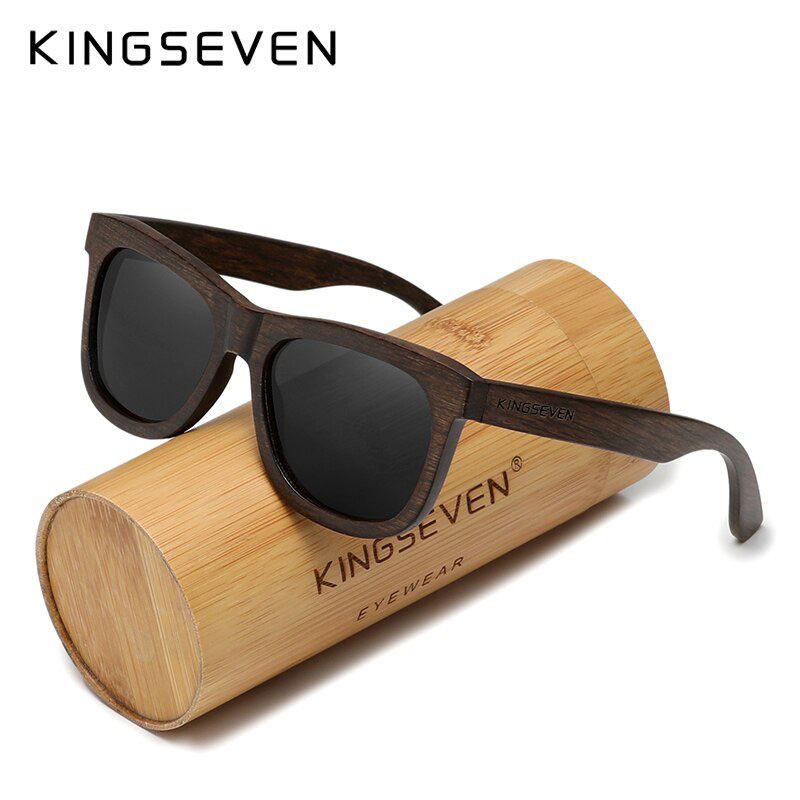
KINGSEVEN® Pure Wood Sunglasses, has become closely associated with the growing global interest in natural material eyewear, where wood grain and texture are no longer just visual details but central to product identity. As discussions around sustainability, material authenticity, and wearable individuality continue to expand, one question increasingly appears in industry observation: How Does The Grain And Texture Of Wood Make Each Pair Of Pure Wood Sunglasses Unique?
Unlike synthetic materials that aim for uniformity, wooden eyewear carries visible variation by nature. In the Wood Sunglasses, every surface line, knot pattern, and fiber direction reflects the tree's growth history. This unpredictability has gradually shifted from being seen as a limitation to becoming a defining aesthetic value. It also changes how users perceive eyewear—not as identical accessories, but as individualized objects shaped by natural processes.
Why Wood Grain Matters in Eyewear Design
Wood grain is often the first visual element noticed in wooden eyewear. It influences not only appearance but also emotional perception, as users tend to associate natural patterns with authenticity and craftsmanship.
Natural Variation as a Visual Fingerprint
Each piece of wood develops under different environmental conditions—sunlight exposure, soil composition, and seasonal growth cycles all leave subtle marks. In Pure Wood Sunglasses, these marks become "visual fingerprints." No two frames can be identical, even if cut from the same log section.
This variation solves a common problem in mass-produced eyewear: visual monotony. Instead of identical finishes, users receive frames that naturally differ in tone, line density, and contrast.
Light, Texture, and Perceived Value
Wood grain also interacts with light differently compared to plastic or metal. The surface absorbs and reflects light unevenly, creating depth that changes depending on viewing angle. This dynamic texture is one of the reasons wooden eyewear is often perceived as more organic and expressive.
The Science Behind Wood Grain in the Wood Sunglasses
Behind the visual appeal lies a structural explanation. Grain patterns are formed by the arrangement of fibers within the wood, and these structures directly influence durability, flexibility, and finish quality.
Growth Rings, Density, and Species Differences
Different tree species produce significantly different grain behaviors. Density and growth speed are key factors:
| Wood Type | Grain Pattern | Density Level | Visual Characteristic |
| Bamboo | Straight, fine lines | Medium | Clean, minimal texture |
| Walnut | Irregular, flowing waves | Medium-high | Deep brown contrast |
| Maple | Subtle, tight grain | High | Smooth and uniform look |
| Zebrawood | Bold striped pattern | High | Strong visual contrast |
These differences explain why the Wood Sunglasses can vary so widely in appearance even within the same product line. The grain is not applied—it is revealed through cutting and polishing.
How Processing Preserves Texture
The transformation from raw wood to eyewear requires careful handling to preserve natural grain integrity. Excessive sanding or chemical treatment can flatten texture, reducing the visual depth that makes wood distinctive.
Modern production approaches, including those applied in KINGSEVEN® designs under Ningbo Beidao E-Commerce Co., Ltd., focus on controlled polishing and stabilization techniques. These methods aim to maintain structural strength while keeping the grain visible and tactile.
User Experience: Comfort, Weight, and Daily Wear
Beyond appearance, wood grain structure indirectly influences how eyewear feels during use. Wood is naturally lighter than many metals, but density variations affect balance and comfort.
One of the less discussed advantages of Pure Wood Sunglasses is skin compatibility. Wood surfaces, when properly finished, are less likely to cause thermal discomfort compared to metal frames in hot or cold environments. This makes them suitable for extended wear, especially in outdoor conditions.
Another point is breathability. While eyewear does not "breathe" in a biological sense, wooden frames tend to avoid the heat retention commonly associated with synthetic materials. This improves perceived comfort during long usage periods such as cycling or travel.
Design and Customization Trends in Eyewear
The growing interest in material individuality has led to expanded customization in eyewear design. Wood grain plays a central role in this movement because it cannot be fully standardized.
In production environments such as those associated with KINGSEVEN Wood Sunglasses, design teams often work with multiple wood batches to achieve visual diversity within controlled parameters. This allows for both consistency in structure and uniqueness in appearance.
Customization in wooden eyewear typically focuses on:
- Frame shape adjustments
- Lens tint variations
- Surface finish levels (matte or semi-gloss)
- Wood combination layering
- Engraving and texture emphasis
The design department structure at Ningbo Beidao E-Commerce Co., Ltd. reflects this trend, where iterative development and feedback-driven adjustments are used to refine both aesthetics and usability. With more than 80 developed product concepts and multiple international design registrations, the emphasis remains on balancing natural material expression with functional eyewear requirements.
Challenges in Maintaining Consistency
While wood grain is valued for its uniqueness, it also introduces challenges in production and quality control. Unlike synthetic materials, wood responds to environmental conditions such as humidity and temperature.
Common considerations include:
- Micro-cracking risks in low-humidity environments
- Color variation between batches
- Surface stability after long-term exposure
- Alignment of grain direction during cutting
To address these issues, stabilization and seasoning processes are essential. These steps help reduce moisture content and improve structural predictability without removing natural texture.
The balance between consistency and individuality remains a central theme in the Wood Sunglasses development. Too much control reduces uniqueness, while too little control affects usability. The goal is to maintain both.
Conclusion
The grain and texture of wood play a defining role in shaping how wooden eyewear is perceived, experienced, and developed. Rather than being an aesthetic afterthought, wood structure directly influences identity, comfort, and design direction. In the context of Pure Wood Sunglasses, these natural variations transform each piece into a distinct visual and tactile object shaped by environmental history and material behavior.
As design approaches continue to evolve within companies such as Ningbo Beidao E-Commerce Co., Ltd., and under brands like KINGSEVEN®, wood grain remains a core factor that connects natural material science with everyday eyewear functionality.
Previous:No News